Young Love & Other Stories I StylusLit I Alison Clifton

September 1, 2022


Young Love and Other Stories

By Félix Calvino

Arcadia, 2021  

Reviewed by Alison Clifton, StylusLit


In his masterful new short fiction collection, Young Love and Other Stories, Félix Calvino explores the shadows, shades, and occasionally shady dealings of the people who inhabit a village in the Carballo area of Galicia, Spain. The interplay between light and shade, silhouettes, shadows, and mirrors, is central to this collection. These stories of village life are set in a liminal time: post-war but pre-electricity. At the one-room school, the lone teacher makes annual promises that the shrinking village will be connected to the grid the following year, while a dwindling group of ageing men gather after the winter rains each spring to fix the unsealed roads.

This may seem like a simple existence. Yet the lives of shepherds, trout fishers, cowherds, basket-weavers, carpenters, healers, and publicans are complex and multifaceted. Though a character may glimpse the bucolic idyll, threats of starvation, social exclusion, and damnation loom over the landscape, casting shadows of potential ruin. To live in a village is to know everyone and be known by everyone. To have one more cow than a neighbour is to rank above them in the social order, but also to teeter precariously close to peril. Fields can flood, livestock can sicken and die, crops can be ravaged by drought. To be different is to be a pariah, suspect, scapegoat. Yet all is not as stifling as it may seem. 

Calvino enters into a dialogue with the giants of European art – visual, sculptural, poetic, prose, and dramatic – who juxtapose light and dark in an eternal, futile battle. In the Christian universe, the Devil must remain subordinate to the omnipotent God who created him. Good must ultimately triumph. Yet, this dichotomy provides the tension in so much of European art and literature. Italian artists like Caravaggio used tenebrismo in their paintings. A harsh, dramatic light isolated and accentuated heroic figures, throwing the spotlight on the struggle between good and evil, Heaven and Hell, God and Satan. Calvino witnesses the implications and repercussions of this simplified, fabricated cosmos of chiaroscuro. Yes, God is Light, but so too was Lucifer the Angel of Light before his fall. Calvino recognises this kinship and rejects reductive binary oppositions. Instead, his characters inhabit a world of subtle shades and hues: the greys brighten to white as often as they darken to black.

Calvino’s collection opens with “Sunday Lunch” (1-27): a meditative tale of loss and death that introduces two protagonists who re-emerge in later stories the way shoots sprout from the soil in spring. When the last female inhabitant of the village, Avelina, dies, Amadeo and Manuel, the two surviving men, must bury her in the proper manner. Things do not go as planned. The pair must make do and mend as they have all their lives. Because it would take four men to shoulder a casket, Amadeo and Manuel improvise. Thus, “the spectral silence of the village” is disrupted by “the screeching of the rusty old wheelbarrow” that will cart the body of their friend to her grave (25).

Meanwhile, Mateo the dog watches on, a constant companion whose loyalty, dogged persistence, and bathetic banality mirror the life of his owner, Manuel. Walking alone through the ghost village at dusk, Manuel lowers his eyes, and the reader is granted a glimpse into his thoughts: “This was the hour of neither day nor night, when shadows, malformed, real, or imagined, appeared from nowhere, silently. Shadows and ghosts were like twin brothers, he thought” (5). Manuel’s matter-of-fact musings are presented without pomp or flourish. In this twilight realm, almost anything is possible, and almost everything thought relegated to the past is capable of re-emergence, regeneration, regrowth, reappearance… perhaps even resurrection.

Calvino’s deft touch with free indirect discourse is further evident in the delightful “Young Love” (28-71). This story alternates between two focalisers – a youthful Manuel and the love of his life, Amelia, who is lost to him under tragic circumstances. The word “Carballo” not only refers to the region where the village is located, but also the oak in the Galician language. Fittingly, one of Manuel’s “favourite pastimes” is to lie on his back “under the enormous oak trees” where he dreams of describing to his beloved Amelia the numinous luminosity of “the sun’s rays filtered through the green leaves” (38). In such moments, the young man, both tortured and thrilled by his nascent feelings for his paramour, is dappled with light and shade under the protective, penumbral oak tree. 

Calvino’s stories are punctuated with such quietly clever moments. His prose is as unassuming and unhurried as the characters he depicts, yet also as deep, generous, and abundant as the rivers and streams that flow through this rural region of Spain.

Again, at key moments in this story, Calvino focuses his lens on a character’s thoughts to evocative effect. Manuel heads to a workshop where the young men and boys gather to discuss the ever-mysterious matters of the flesh, the heart, and the opposite sex. As he walks, he observes the time of day told through the waning sunlight: “The afternoon shadows were lengthening, he noted. Shadows had always intrigued him. They were part of his first recollections” (49). Light and shadow are mutually dependent Calvino seems to suggest. We need both. We cannot have one without the other.

Thus, in “Abel’s Journey” (79-133), the reader learns that the protagonist is rapidly going blind, his vision obscured by shadows. Abel keeps a gallery of mental images to retain memories of places lost in the shadows of time. An orphan passed from house to house, often treated less as servant than slave, Abel is a figure of the shadows. The children at one house – no different in age to him but accorded the status of family members rather than an inconvenient mouth to feed – torment him before a flickering fire. They fill his shoes with “glowing embers and ash” (85). Fire should provide light and warmth and the means to cook nourishing food, but it is used to belittle the servant boy and destroy his meagre possessions.

By contrast, shadows provide comfort. There, Abel can rest in anonymity and be certain of the passage of time: “he could always tell the hour by the shadows shortening in the morning and lengthening in the afternoon on familiar trees or a wall” (95). However, as Abel is uprooted so often, he is constantly displaced, rendering everything unfamiliar once more. 

Finally, Abel settles into a family that cares for him and treats him like a son. He has found a potential wife, Pilar, whose father is dead and whose mother’s health is failing, meaning that she offers a modest house and land for them to fix and farm together. However, just as his future appears bright, Abel faces losing his sight entirely. The doctor despairs. Christina, Abel’s fearful protector and the matriarch of the household he serves, turns her gaze inwards. She is torn between risking the wrath of God by taking her ward to a healer in a nearby village – a woman denounced as Satanic by the Church – and the prospect of having to support a blind man for the rest of his life. Her husband’s land can barely sustain their family. She prays. She rues her misfortune. She considers accepting her fate as ordained by God. Yet, a faint hope glimmers. It is offered by the healer.

There are signs that all will be well. The village of Pereiras, where the healer lives, nestles between hillsides dotted with “ancient oak trees” (126). Again, the oak, the mightiest of trees according to the medieval Christian concept of the Great Chain of Being, towers over the protagonists of these pages. The oak was here long before the roots of Christianity took hold, and a magical, mystical, pagan presence haunts this region. A spirit of the land predates Christianity, and Abel is attuned to it.

This communion is conveyed through the revelation that Pilar loves the “quiet stability” that Abel brings to her life and his suggestions for “the planting of trees” on her family’s property (109). In this way, Abel is allied with the strong, silent oaks that cast their shade over the village, hills, and waterways of Carballo. He is also a man of the shadows, not bothered by the villagers’ superstition that they are “the hiding place of ghosts” (132).

Here is subtle complexity. While Abel finds it strange that “some people were afraid of shadows,” he also recognises that “shadows had been a source of hope as well as frustration” for him (132). Shadows are “handy to measure the height of the church’s bell tower, or a tree,” and they were “inexplicable companions in his childhood” (132): friendly, if unfathomable. However, Abel also realises of the shadows that “for many years, he had believed they were hiding the face of his mother” (132). Orphaned, abandoned, unclaimed by his unknown father and unwanted by his unwed mother, Abel is a product of shady circumstances. So, too, is Marcia: the healer who protects his remaining vision. She lives in the shadows of oppression and persecution. It is unsurprising, then, that her face becomes obscured by time once Abel’s future is secured: “All his efforts to install Marcia’s image in his scene gallery had failed” (133).

By contrast, Calvino’s collection is a triumph. While Calvino eschews binary oppositions and superlatives in his writing, his readers may find themselves resorting to almost hyperbolic descriptions of his work. Calvino delivers a superb collection of fiction that builds upon his earlier work even as it digs deeper into the past and roams further from his adopted country of Australia. At once profound, comic, and tragic, Young Love and Other Stories is a stunningly-rendered kaleidoscope of rare beauty. Not all is monochrome. Warm and radiant with light. Dark as though diving deep into the hearts and minds of the people of Carballo. Calvino’s work relies on contrast and contradiction. That is its power.


Félix Calvino’s Fiction I Luke Stegemann @lukestegemann

 May 27, 2022


These are a delight - four slim volumes of gentle and austere fictions from Galician-Australian author Félix Calvino. Wonderful evocations of post-war rural Galicia, and the difficult, often strange, often comic migrant experience in Australia.


Benengeli 2022 I I Instituto Cervantes Sydney


June 6, 2022

Benengeli in the 5 continents. Realism: Javier Moreno, Andrew Pippos and Felix Calvino

Benengeli in the 5 continents. Realism: Javier Moreno, Andrew Pippos and Felix Calvino 

The gradual return to the face-to-face activity is one of the great news of this year 2022. In five of the Instituto Cervantes centers around the world, the reflections of Spanish-language authors will be heard and they will dialogue with writers from Australia, India, France , Senegal and the United States, about the main elements of fiction in the whole world.    

Thus, the authors Javier MorenoAndrew Pippos and Félix Calviño will be talking about Realism with the Hispanist Luke Stegemann

https://cultura.cervantes.es/sidney/en/benengeli-in-the-5-continents.-realism%3A-javier-moreno/152441


Instituto Cervantes I Benengeli 2022

 May 25, 2022


BENENGELI 2022 THE LARGEST SPANISH-LANGUAGE LITERATURE FEST IN THE WORLD

Fri Jun 10 2022 at 06:00 pm Instituto Cervantes, 31 W Ohio St, Chicago, IL 60654, EE. UU., Chicago, United States

INSTITUTO CERVANTES CHICAGO PRESENTS THE CLOSING ROUND TABLE OF THIS WORLDWIDE EVENT. A DIALOGUE BETWEEN THE WRITERS MIGUEL GOMES AND FREDERICK DE ARMAS MODERATED BY ROCÍO FERREIRA

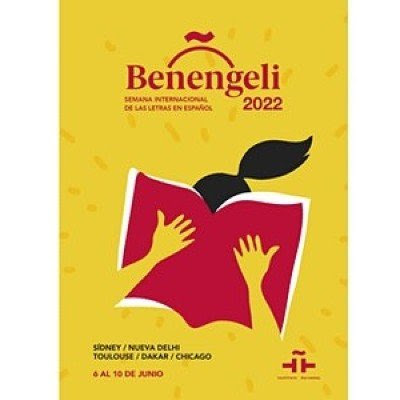
Instituto Cervantes in Chicago is proud to announce that it will be part of the worldwide literary festival Benengeli 2022 which will take place from 6th to the 10th of June in the five continents with more than 40 Spanish English and French writers offering their reflections on the theme of realism.

 The Instituto Cervantes in Spain as part of the Spanish Ministry of Foreign Affairs is working on a worldwide literary festival that promotes Spanish literature Benengeli 2022 the International Week of Spanish Literature. Benengeli 2022 will be jointly hosted at the centres of Instituto Cervantes in Chicago (North America) Toulouse (Europe) Casablanca (Africa) New Delhi (Asia) and Sydney (Australia). The central theme of Benengeli 2022 is realism.

 Benengeli 2022 closing event at the Instituto Cervantes in Chicago on June 10th at 6 pm with the Miguel Gomes conversing with Frederick de Armas about narrative fictions in the 21st century and the weight that realistic aesthetics. Rocío Ferreira will act as moderator of this remarkable event.

 Miguel Gomes is a storyteller born in Caracas in 1964. He studied at the University of Coimbra in Portugal and at the Central University of Venezuela. He later obtained a doctorate at Stony Brook University in New York. Since 1989 he has lived in the United States where he works as a graduate professor at the University of Connecticut. Among his titles are the novels Llévame esta noche Retrato de un caballero and Ante el jurado; books of short stories La cueva de Altamira Un fantasma portugués and Julieta en su castillo; and volumes of criticism and essays El pozo de las palabras Los géneros literarios en Hispanoamérica and La realidad y el valor estético: configuraciones del poder en el ensayo hispanoamericano.

https://languages.uconn.edu/person/miguel-gomes/

Frederick de Armas received his PhD in Comparative Literature from the University of North Carolina. He has published novels El abra de Yamurí and Sinfonía Salvaje as well as several critical essays including “El retorno de Astrea: Astrología mito e imperio en Calderón” “La astrología en el teatro clásico europeo” and “Cervantes' Architectures: The Danger Outside.” He has served as president of the Cervantes Society of America and the International Association Siglo de Oro (AISO). He currently holds the Andrew W. Mellon Chair at the University of Chicago.

https://rll.uchicago.edu/frederick-de-armas

Rocío Ferreira

https://las.depaul.edu/academics/modern-languages/faculty/spanish/Pages/rocio-ferreira.aspx

Rocío Ferreira is Associate Professor of Latin American literature culture and cinema and Chair of the Department of Women’s and Gender Studies at DePaul University in Chicago. She earned a doctorate in Latin American literature and in Women’s Gender and Sexualities Studies from the University of California Berkeley. She specializes in nineteenth-century and contemporary literary and visual culture written by women. Her areas of research are foundational narratives and journalism of the 19th century war literature (XIX-XXI) and contemporary issues related to the configurations of memory in literature culture and cinema. She has participated in numerous international congresses has published critical articles in specialized books and scholarly journals and critical editions in addition to her monograph De las Veladas literarias a la Cocina ecléctica: mujeres cultura y nación en el Perú decimonónico. She is currently writing a new book on women writing on the Peruvian internal armed conflict entitled Las mujeres disparan: Imágenes y poéticas de la violencia política (1980-2000) en la cultura literaria y visual peruana contemporánea.

 Voices of great aesthetic power such as those of Piedad Bonnet (Colombia) Katya Adaui (Peru) Magela Baudoin (Bolivia) Carlos Cortés Zúñiga (Costa Rica); Selva Almada (Argentina) Rodrigo Blanco Calderón (Venezuela) Evelio Rosero (Colombia) Fernanda Trías (Uruguay) Vicente Luis Mora (Spain) Mayra Santos Febres (Puerto Rico) Carlos Franz (Chile) Ronaldo Menéndez (Cuba) Pedro Crenes (Panama) Antonio José Ponte (Cuba) Santiago Gil (Spain) and Jacinta Escudos (El Salvador) will present the elements that constitute the axis of their work and the relationship of love distance or rejection that each one of them experiences in front of the realistic discourse that seems to define a good part of the universal narrative of this moment of the 21st century.

Outstanding narrators such as Valeria Correa Fiz (Argentina) David Toscana (Mexico) and Spaniards Juana Salabert Daniel Gascón Bárbara Mingo Costales and José Ovejero will talk about their most recent books; titles that constitute a living landscape on the fictional recreation that marks current times.

Impossible to forget the presence of the Lima writer Fernando Iwasaki who will offer small spoken portraits on the play with reality that authors belonging to various traditions and territories and who have adopted or maintained Spanish as their artistic language make. We will thus get to know the work of Siu Kam Wen Fabio Morabito Ioana Gruia Kalman Barsy and Mónika Zgustova.

As the dialogue between diverse literary traditions is one of the main attempts of Benengeli 2022 the activities will also include the presence of writers such as Lydie Salvayre (France); Ken Bugul (Senegal) Andrew Pippos (Australia) Félix Calviño (Spain/Australia) and Geetanjali Shree (India).

Benengeli 2022 an initiative of the Cervantes Institute whose curator is writer Nicolas Melini has the support of institutions and cultural entities from Buenos Aires Lima La Paz Bogota Caracas San Jose de Costa Rica San Juan de Puerto Rico Panama City Las Palmas de Gran Canaria Santa Cruz de La Palma Seville and Madrid.

Between June 6 and 10 in addition to the on-site activities in each of the five cities of Benengeli 2022 the virtual programming of this festival will be available through the Instituto Cervantes in in Sydney New Delhi Toulouse Dakar and Chicago You Tube channels the Podcast channel of the Cervantes Institute and through the following link: https://cvc.cervantes.es/benengeli22/. As mentioned at the beginning of this information the content will be available not only in Spanish but also in dubbed or subtitled versions in English.  

https://www.eventbrite.com/e/benengeli-2022-the-largest-spanish-language-literature-fest-in-the-world-tickets-348204558207?aff=ebdssbdestsearch


Instituto Cervantes I Benengeli 2022 I elDiario.es/

 May 25, 2022


Benengeli 2022, la Semana Internacional de la Literatura en Español del Instituto Cervantes, recorrerá este año todo el planeta y tendrá lugar en las sedes del Instituto Cervantes en Sídney, Nueva Delhi, Toulouse, Dakar y Chicago.

Con el «realismo» como tema básico, el nicaragüense Sergio Ramírez, el peruano Alfredo Bryce Echenique, Eduardo Halfon de Guatemala, Luisa Valenzuela de Argentinael venezolano miguel gomes y los españoles Rosa Montero, Ignacio Martínez de Pisón, Soledad Puértolas, José Manuel Fajardo, Marta Barrio y Javier Moreno intervendrán en los distintos apartados de esta semana, que también incluye encuentros con narradores de Australia, India, Francia, Senegal y EE.UU. Estados Unidos

Mesas redondas presenciales, entrevistas, micropresentaciones en video, diálogos radiales son los formatos que componen este evento, que traerá al mundo una destacada y variada selección de la mejor literatura en nuestro idioma.

Voces de gran poder estético como las de Piedad Bonnet (Colombia), Katya Adaui (Perú), Magela Baudoin (Bolivia), Carlos Cortés Zúñiga (Costa Rica); Selva Almada (Argentina), Rodrigo Blanco Calderón (Venezuela), Evelio Rosero (Colombia), Fernanda Trias (Uruguay), Vicente Luis Mora (España), Mayra Santos Febres (Puerto Rico), Carlos Franz (Chile), Ronaldo Menéndez (Cuba), Pedro Crenes (Panamá), Antonio José Ponte (Cuba), Santiago Gil (España) y Jacinta Escudos (El Salvador) expondrán los elementos que forman el eje de su obra y la relación de amor, distancia o rechazo que cada uno de ellos crea frente a los más discurso realista, que parece definir gran parte de la narrativa universal de este momento del siglo XXI.

También disertantes destacados como Valeria Correa Fiz (Argentina), David Toscana (México) y los españoles Juana Salabert, Daniel Gascón, Bárbara Mingo Costales y José Ovejero hablarán sobre sus últimos libros; Títulos que acaban de aparecer en las librerías en nuestro idiomay que configuran un paisaje vivo sobre la recreación ficcional que marca el tiempo actual.

Inolvidable es la presencia del escritor limeño Fernando Iwasaki, quien ofrecerá pequeños retratos hablados sobre el juego con la realidad, realizados por autores pertenecientes a diferentes tradiciones y territorios, que han adoptado o mantenido el español como lenguaje artístico. Así conocemos las obras de Siu Kam Wen, Fabio Morabito, Ioana Gruia, Kalman Barsy y Mónika Zgustova.

Como el diálogo entre diferentes tradiciones literarias es uno de los principales intentos de Benengeli 2022, las actividades también serán impulsadas por escritores como Lydie Salvayre (Francia); Geetanjali Shree (India); Ken Bugul (Senegal), Frederick de Armas (Estados Unidos), Andrew Pippos (Australia) y Félix Calviño (España/Australia).

Benengeli 2022, una iniciativa del Instituto Cervantes, cuyo curador es el escritor palmesano Nicolás Melini, cuenta en esta ocasión con el apoyo de instituciones y organismos culturales de Buenos Aires, Lima, La Paz, Bogotá, Caracas, San José de Costa Rica , San Juan Puerto Rico, Ciudad de Panamá, Santa Cruz de La Palma, Las Palmas de Gran Canaria, Sevilla y Madrid.

Entre ellos podemos señalar a la Universidad de Loyola; la Real Academia de la Lengua; Asale (España); el Instituto Caro y Cuervo (Colombia); Radio Deseo (Bolivia), Radio Universidad (Costa Rica), Unión Radio (Venezuela), Radio Universidad (Puerto Rico), KW Continente (Panamá), Revista Libros y Letras (Colombia); RNE en Madrid y Canarias (España) y Cadena Ser en Canarias (España).

Entre el 6 y el 10 de junio se podrá acceder a la programación virtual de Benengeli 2022 a través de los canales de YouTube del Cervantes de Sydney, Nueva Delhi, Toulouse, Dakar y Chicago y el canal de podcast del Instituto Cervantes; Contenido que se puede disfrutar no solo en español sino también en versiones dobladas o subtituladas en inglés y francés.

 https://www.eldiario.es/canariasahora/lapalmaahora/cultura/nicolas-melini-comisario-benengeli-2022-encuentro-internacional-letras-espanol-instituto-cervantes_1_9024741.html

Young Love & Other Stories I Anne Di Lauro

 May 27, 2022

In Félix Calvino’s Young Love we meet Manuel as an old man, and then have the pleasure of recognising him again in the story that follows, as a boy in love. In other stories we meet other young people, each with their poignant love story to tell. We are transported to another time and place, to a Galician village, perhaps about 50 years ago. We accompany the characters in their daily tasks and routines and dance with them at weddings and festivals. The sense of place is vividly conveyed. We are there in the school room, in the family kitchen, at gatherings where the young learn about life and love from village hearsay, while trying to understand their dawning feelings of love. The stories are wrapped in a poignant sense of potential tragedy that is never spelled out: an atmosphere that is a hallmark of all of Félix Calvino’s stories. This, as well as the simplicity and quiet wit with which the stories are told, makes his writing stand out as unusual and refreshing.

 Anne Di Lauro


Young Love & Other Stories I Janice Jones

 May 21, 2022


Janice Jones

Felix’s writing is dreamy, sensuous and evocative of love on an intimate scale, and slower time. I have loved reading A Hatful of Cherries, and Young Love…both tender and evocative collections of human stories unwinding in slow time. Gorgeous. Just what I needed to remind me of real love.

https://www.facebook.com/felix.calvino.1/